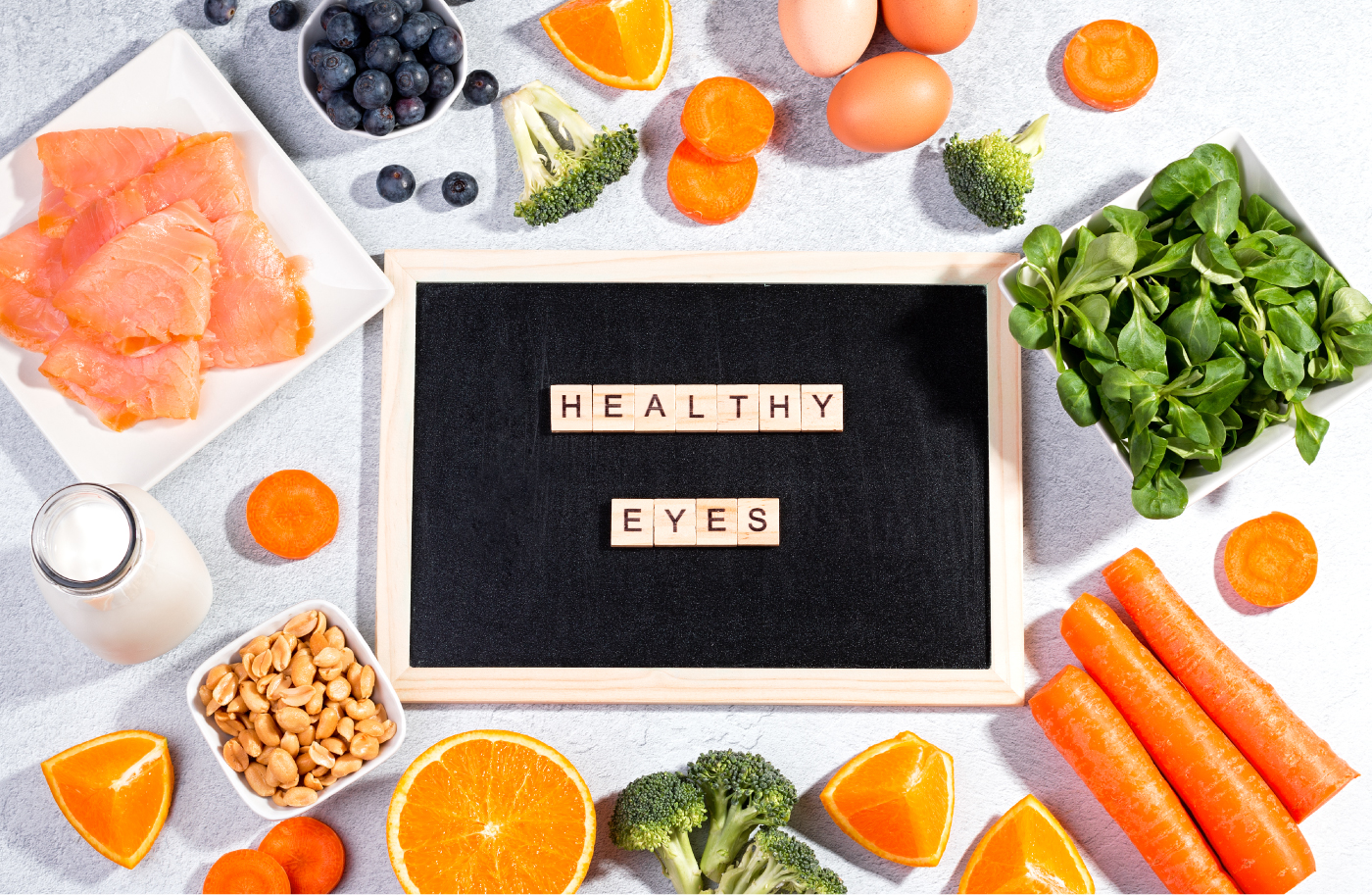
Good vision is essential for daily life, and maintaining it can often be as simple as watching what you eat. Just as certain foods can boost heart or brain health, there are also key nutrients that support healthy eyes and reduce the risk of vision problems as you age. In this blog, we’ll explore some of the best foods to incorporate into your diet to help protect your eyes, improve vision, and promote long-term visual health.
1. Leafy Greens: Rich in Lutein and Zeaxanthin
Dark, leafy greens like spinach, kale, and collard greens are packed with lutein and zeaxanthin, two powerful antioxidants that have been shown to protect the eyes from harmful blue light and UV rays. These compounds help to filter out damaging light, reducing the risk of age-related macular degeneration (AMD) and cataracts.
- Why they’re important: Lutein and zeaxanthin are found in the retina and help maintain healthy cells in the eyes.
- How to eat them: Add spinach to smoothies, salads, or omelets, or sauté kale as a nutrient-rich side dish.
2. Carrots: High in Beta-Carotene and Vitamin A
Carrots are famous for their visual health benefits, and with good reason. They are rich in beta-carotene, a type of vitamin A that plays a crucial role in maintaining healthy vision. Vitamin A helps form rhodopsin, a protein in your eyes that allows you to see in low light conditions.
- Why they’re important: A deficiency in vitamin A can lead to night blindness and other vision impairments.
- How to eat them: Snack on raw carrots with hummus, or roast them for a delicious side dish.
3. Fatty Fish: Omega-3 Fatty Acids
Fish such as salmon, mackerel, sardines, and tuna are high in omega-3 fatty acids, particularly DHA (docosahexaenoic acid), which is a structural component of your retina. Omega-3s help reduce inflammation, support tear production, and may help prevent dry eye syndrome.
- Why they’re important: Omega-3s can help protect against macular degeneration and dry eyes, while also supporting overall eye health.
- How to eat them: Incorporate fatty fish into your diet at least twice a week by grilling, baking, or adding it to salads and tacos.
4. Eggs: Lutein, Zeaxanthin, and Zinc
Eggs are an excellent source of lutein and zeaxanthin, as well as zinc, which plays a vital role in visual health. Zinc is concentrated in the retina and helps convert light into signals that are sent to the brain. It also aids in protecting against night blindness and cataracts.
- Why they’re important: The nutrients in eggs help prevent age-related vision problems like macular degeneration and cataracts.
- How to eat them: Enjoy eggs boiled, scrambled, or as part of a healthy breakfast with whole grains and vegetables.
5. Citrus Fruits: Packed with Vitamin C
Oranges, grapefruits, lemons, and other citrus fruits are high in vitamin C, a powerful antioxidant that helps maintain the health of blood vessels in the eyes. Vitamin C also works to combat oxidative stress, which can lead to the development of cataracts and age-related macular degeneration.
- Why they’re important: Vitamin C helps protect against cataracts and slows the progression of macular degeneration.
- How to eat them: Incorporate citrus fruits into your diet by adding them to salads, smoothies, or enjoying them as a snack.
6. Nuts and Seeds: Rich in Vitamin E
Nuts and seeds, such as almonds, sunflower seeds, and walnuts, are high in vitamin E, an antioxidant that protects the eyes from oxidative damage. Vitamin E helps maintain healthy eye cells and reduces the risk of age-related eye conditions, including cataracts and macular degeneration.
- Why they’re important: Vitamin E helps slow down the progression of age-related vision loss.
- How to eat them: Enjoy a handful of nuts or seeds as a snack, or sprinkle them on salads, yogurt, or oatmeal.
7. Bell Peppers: Full of Vitamin C and Beta-Carotene
Bell peppers, especially the brightly colored ones, are rich in vitamin C, beta-carotene, and other essential vitamins like vitamin E. These nutrients improve your visual health by protecting them from free radical damage and supporting the immune system.
- Why they’re important: Bell peppers help maintain the health of blood vessels in the eyes and may protect against cataracts.
- How to eat them: Slice raw bell peppers into strips for snacking, or add them to stir-fries, salads, or roasted vegetable dishes.
8. Sweet Potatoes: High in Beta-Carotene and Vitamin A
Sweet potatoes are another excellent source of beta-carotene, which the body converts into vitamin A, essential for night vision and preventing dry eyes. Like carrots, they help protect the eyes’ surface and reduce the risk of age-related eye conditions.
- Why they’re important: Beta-carotene plays a critical role in maintaining the cornea and preventing night blindness.
- How to eat them: Roast sweet potatoes, mash them, or use them in soups and stews for a nutrient-packed meal.
9. Legumes: Packed with Zinc
Beans, lentils, and chickpeas are rich in zinc, an essential mineral that supports eye health by helping vitamin A create melanin, a protective pigment in the eyes. Zinc is critical for protecting the retina and maintaining overall eye function.
- Why they’re important: Zinc helps prevent night blindness and may reduce the risk of macular degeneration.
- How to eat them: Incorporate legumes into soups, stews, or salads for a filling, nutrient-dense option.
10. Blueberries: Full of Antioxidants
Blueberries and other berries are loaded with antioxidants, including vitamin C and vitamin E, which protect the eyes from free radical damage. Studies suggest that the antioxidants in blueberries may also help lower the risk of cataracts and glaucoma.
- Why they’re important: The antioxidants in blueberries support overall eye health and help prevent age-related vision loss.
- How to eat them: Add blueberries to your morning cereal, yogurt, or enjoy them as a snack.
Conclusion
Incorporating these nutrient-rich foods into your daily diet can have a profound impact on your visual health. The combination of antioxidants, vitamins, and minerals found in leafy greens, fatty fish, carrots, and other foods helps protect your eyes from conditions like cataracts, macular degeneration, and dry eye syndrome.
Pairing a healthy diet with regular eye check-ups ensures your eyes stay in top shape, giving you clear, healthy vision for years to come. So next time you’re planning meals, remember that what’s good for your body is often great for your eyes too!