Eye Prescriptions: Understanding the Differences

Eye Prescriptions

Navigating the world of eye prescriptions can be overwhelming, especially if you’re unfamiliar with the terminology and numbers associated with them. However, understanding the differences between various types of eye prescriptions is essential for ensuring optimal vision correction and eye health. In this blog, we’ll explore how to interpret different types of eye prescriptions, including those for glasses and contact lenses, so you can make informed decisions about your eye care needs.

Understanding Glasses Prescriptions

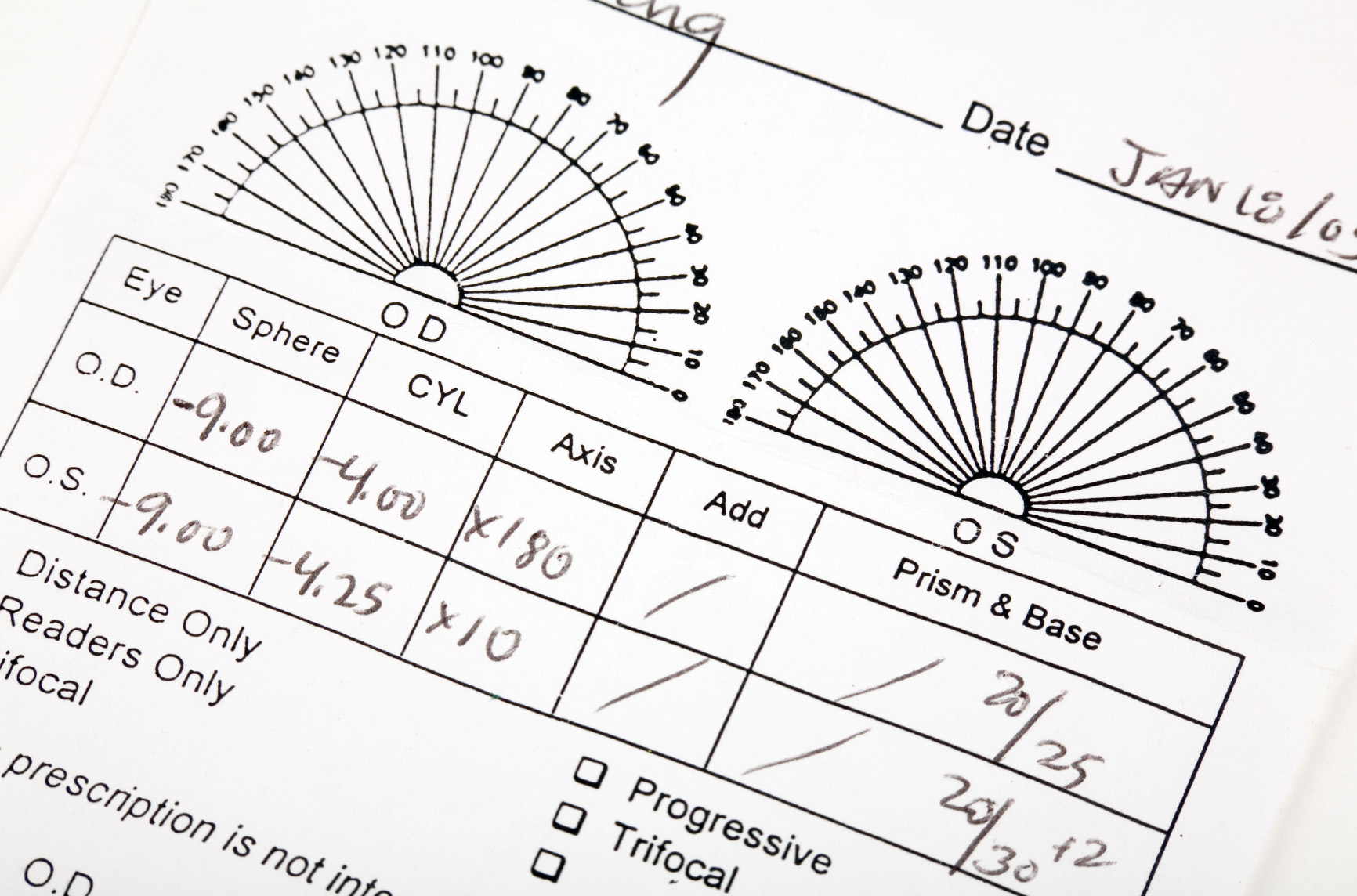
Glasses prescriptions, also known as spectacle prescriptions, are written in a standardised format and include several key components:

  • Sphere (SPH): This indicates the amount of lens power needed to correct nearsightedness (myopia) or farsightedness (hyperopia). A negative number (-) indicates nearsightedness, while a positive number (+) indicates farsightedness.
  • Cylinder (CYL): This measures the degree of astigmatism, which occurs when the cornea or lens has an irregular shape. The cylinder value corrects the distortion caused by astigmatism and can be a positive or negative number.
  • Axis: The axis specifies the orientation of the cylindrical correction needed to address astigmatism. It is measured in degrees from 0 to 180, with 90 degrees corresponding to the vertical meridian of the eye.
  • Addition (ADD): This value is for multifocal lenses, such as bifocals or progressives, and indicates the additional power necessary for near vision correction.

Deciphering Contact Lens Prescriptions

Contact lens prescriptions contain similar components to glasses prescriptions but may include additional parameters specific to contact lens wear:

  • Base Curve (BC): This refers to the curvature of the contact lens and is crucial for ensuring a proper fit on the cornea. Base curve values typically range from 8.0 to 10.0 millimeters.
  • Diameter (DIA): The diameter specifies the size of the contact lens and uses millimeters for measurement. It determines how well the lens covers the cornea and aligns with the eye’s natural curvature.
  • Brand and Material: Contact lens prescriptions may also specify the brand and material of the lenses prescribed, as different brands and materials offer unique features and benefits.

Recognising Differences in Eye Prescriptions

While glasses and contact lens prescriptions serve the same purpose of correcting vision, there are notable differences between them. Glasses prescriptions are typically stronger than contact lens prescriptions due to the distance between the lens and the eye. Additionally, contact lens prescriptions include additional parameters, such as base curve and diameter, to ensure proper fit and comfort.

Consulting with an Eye Care Professional

Interpreting eye prescriptions can be complex, and it’s essential to consult with an eye care professional if you have any questions or concerns. Optometrists and ophthalmologists are there to assess your vision needs, prescribe appropriate corrective measures, and address any underlying eye health issues.

Conclusion

Understanding the differences between various types of eye prescriptions is essential for maintaining optimal vision and eye health. Whether you’re considering glasses or contact lenses for vision correction, knowing how to interpret prescriptions empowers you to make informed decisions about your eye care needs.

By familiarising yourself with the components of eye prescriptions and consulting with an eye care professional, you can ensure that you receive the best possible vision correction and enjoy clear, comfortable vision for years to come.

Get in touch with the team at VIP Eyewear and we can help you get the right glasses for you.

Recent Articles

Foods for Eye Health

The Best Foods for Eye Health

Your eyes are one of the most important organs in your body, allowing you to experience the world in vivid detail. Like the rest of